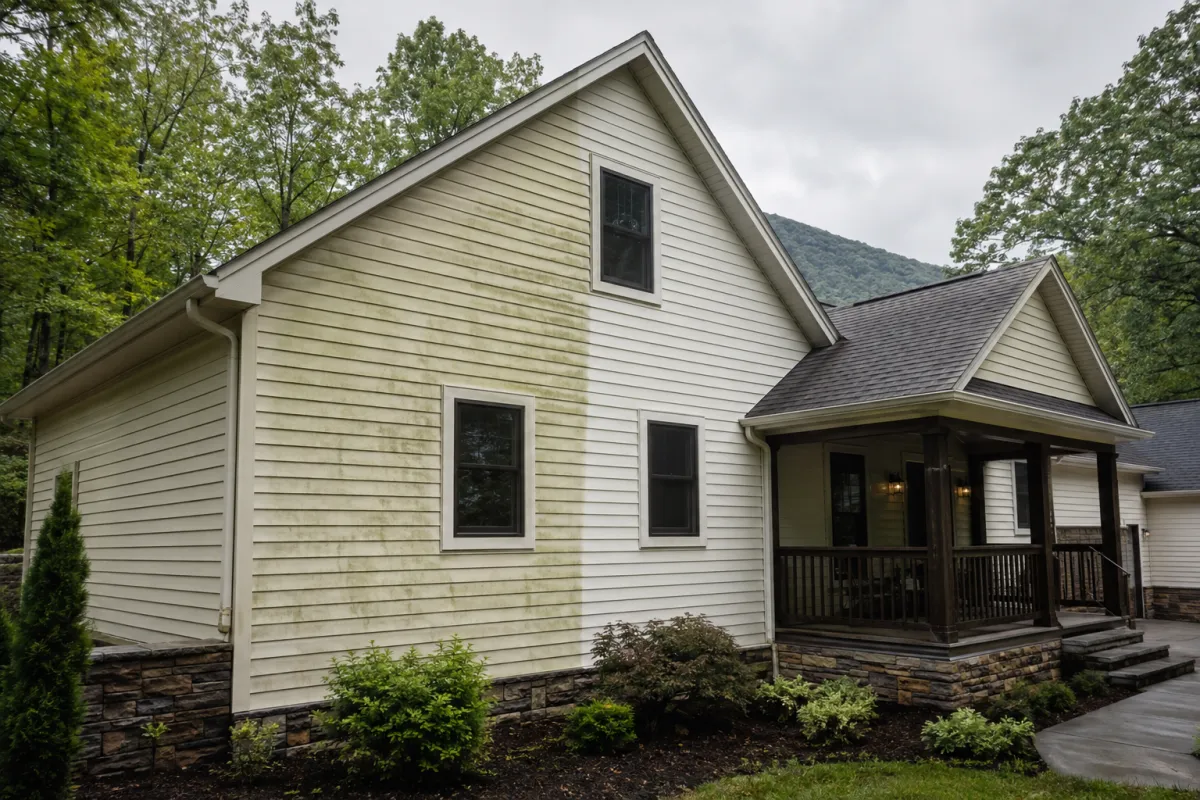
When to Pressure Wash Your House in Tennessee: A Timing Guide
When to Pressure Wash Your House, and Why Timing Changes the Result
Knowing when to pressure wash your house matters as much as whether you do it at all — because the same wash performed in the wrong conditions can leave streaks, damage siding, or simply fail to remove the growth it was meant to remove. Temperature, season, and even cloud cover change the outcome.
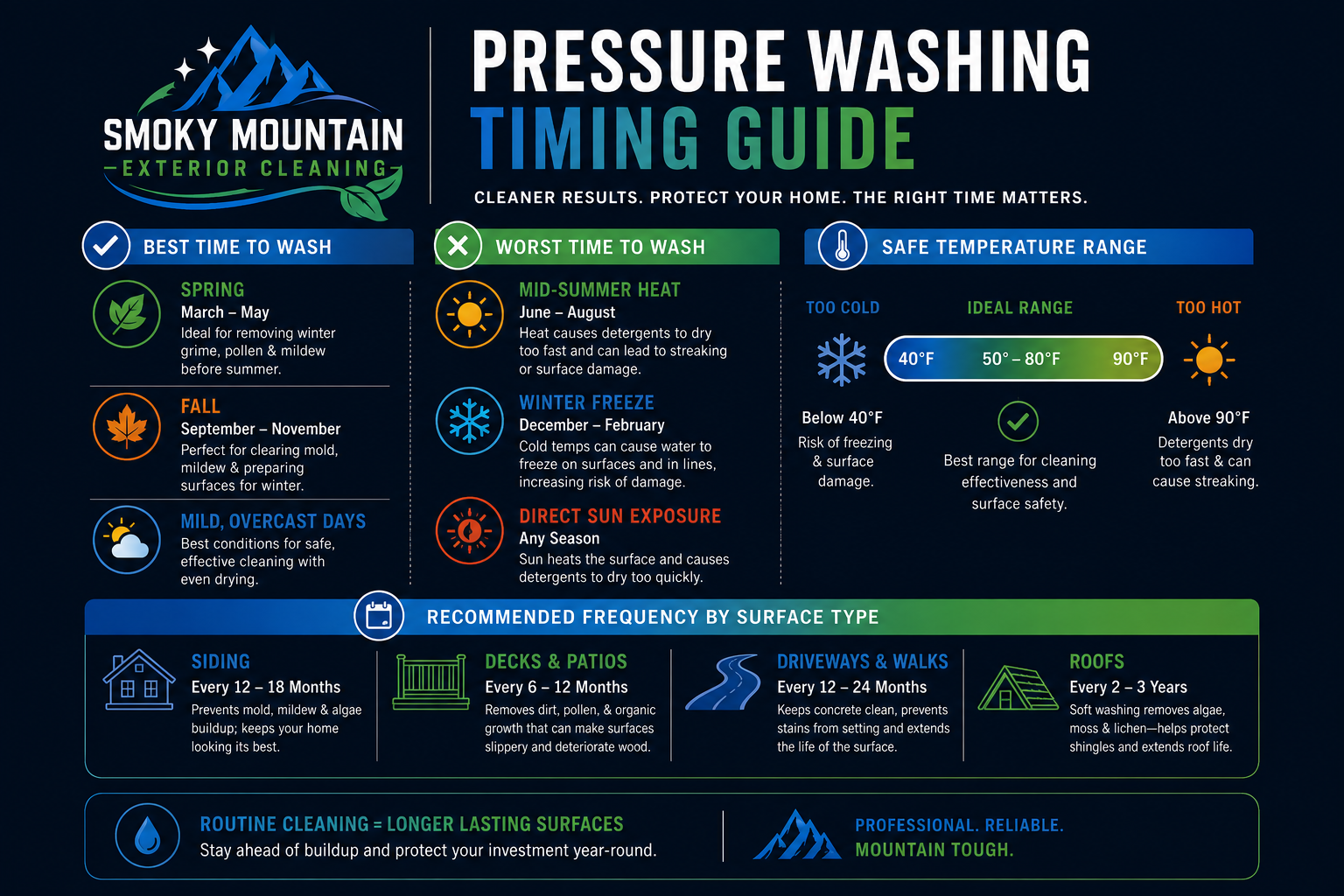
Quick Reference: Timing by Season
•Spring — Best overall. Key benefit: clears winter mildew and spring pollen in one pass, and prepares surfaces before the summer growth season.
•Fall — Strong second choice. Key benefit: removes a summer's worth of algae and pollen before things sit through winter.
•Summer — Workable with care. Key benefit: warmth helps cleaning solutions activate, though midday heat causes streaking.
•Winter — Avoid. Key benefit: none. Freezing temperatures create real risk of damage rather than cleaning.
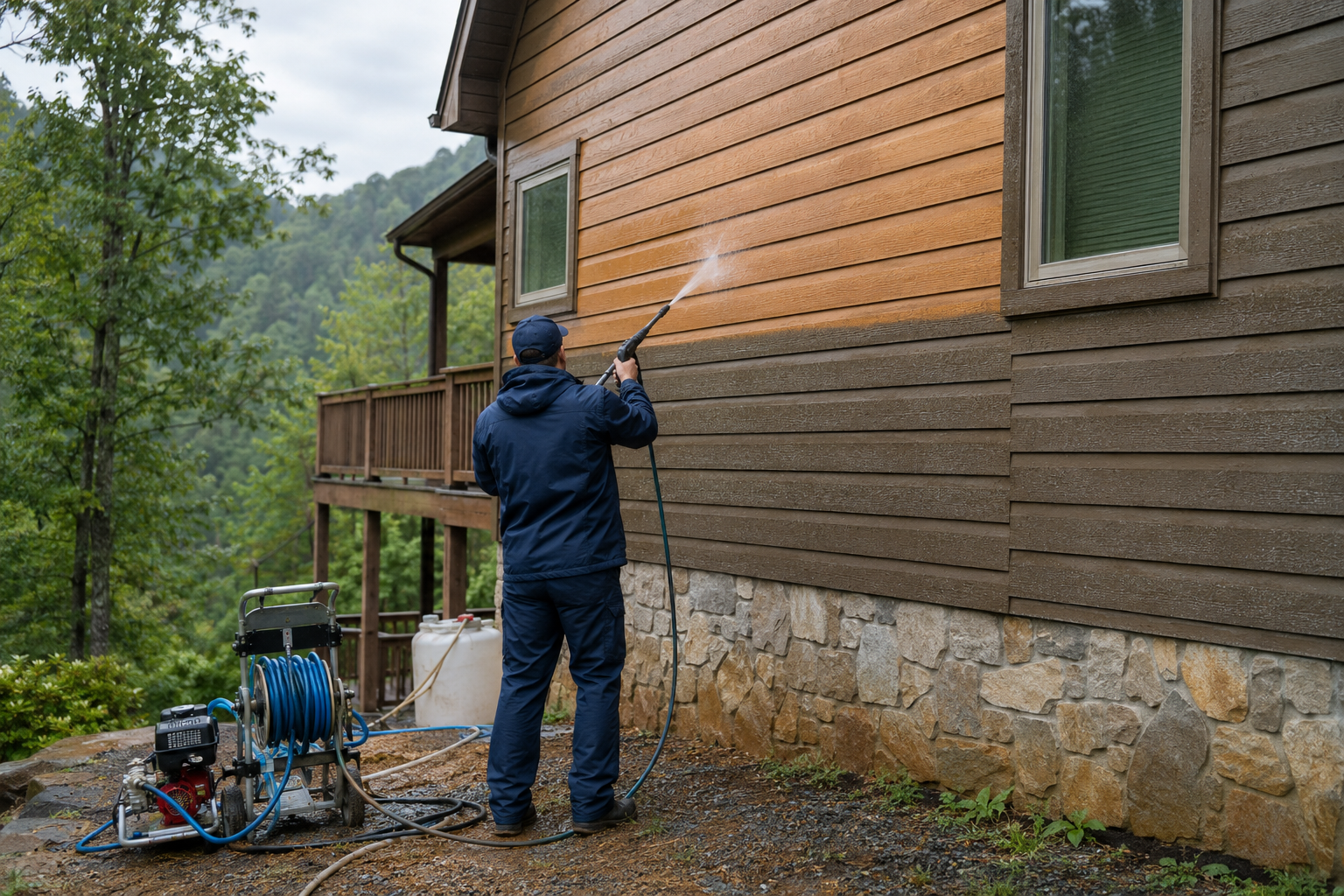
The baseline recommendation nationally is a full exterior wash once a year. That figure assumes moderate conditions. In humid regions where mold, mildew, and algae actively thrive, the guidance shifts to every six to twelve months, and for the Southeast specifically, twice a year — spring and fall — is generally considered ideal.
Tennessee lands squarely in that second category, and East Tennessee especially so. The state's combination of heavy pollen and fluctuating moisture makes a spring wash close to mandatory rather than optional. Add the tree canopy and humidity that define the Smoky Mountain foothills, and siding here collects organic growth noticeably faster than in drier parts of the country.
I'm Samson Ferrell, Owner of Total Cabin and Home Maintenance, and my crews wash homes, cabins, and rental properties across Pigeon Forge and the surrounding area. Here's how to time it so the work actually holds.
The Temperature Window Most People Get Wrong
Here's the part that surprises homeowners: a bright, hot, sunny Saturday is close to the worst possible time to wash a house.
When temperatures climb past 75 degrees and the sun is hitting the surface directly, cleaning solution evaporates before it has time to break down algae and grime. The result is streaking and stains that weren't there before the wash — and on siding, those streaks are far more visible than the film they replaced. On the other end, working below 40 degrees introduces freezing risk, where water in seams and behind trim does more harm than the dirt ever would.
That leaves a workable window between roughly 40 and 75 degrees, and within it, an overcast day beats a sunny one every time. Cloud cover keeps surfaces from heating and gives the solution time to work. It's counterintuitive enough that most DIY washes happen on exactly the wrong day.
There's a second factor worth knowing: rinsing alone doesn't kill organic growth. Water removes what's on the surface, but mold and algae live at the root, which is why an untreated wash looks good for a month and then greens back up faster than expected. Proper treatment uses cleaning solutions that eliminate the growth rather than displacing it — which is also why professional washes last considerably longer than a rented machine and a garden hose.
Signs It's Time, Regardless of the Calendar
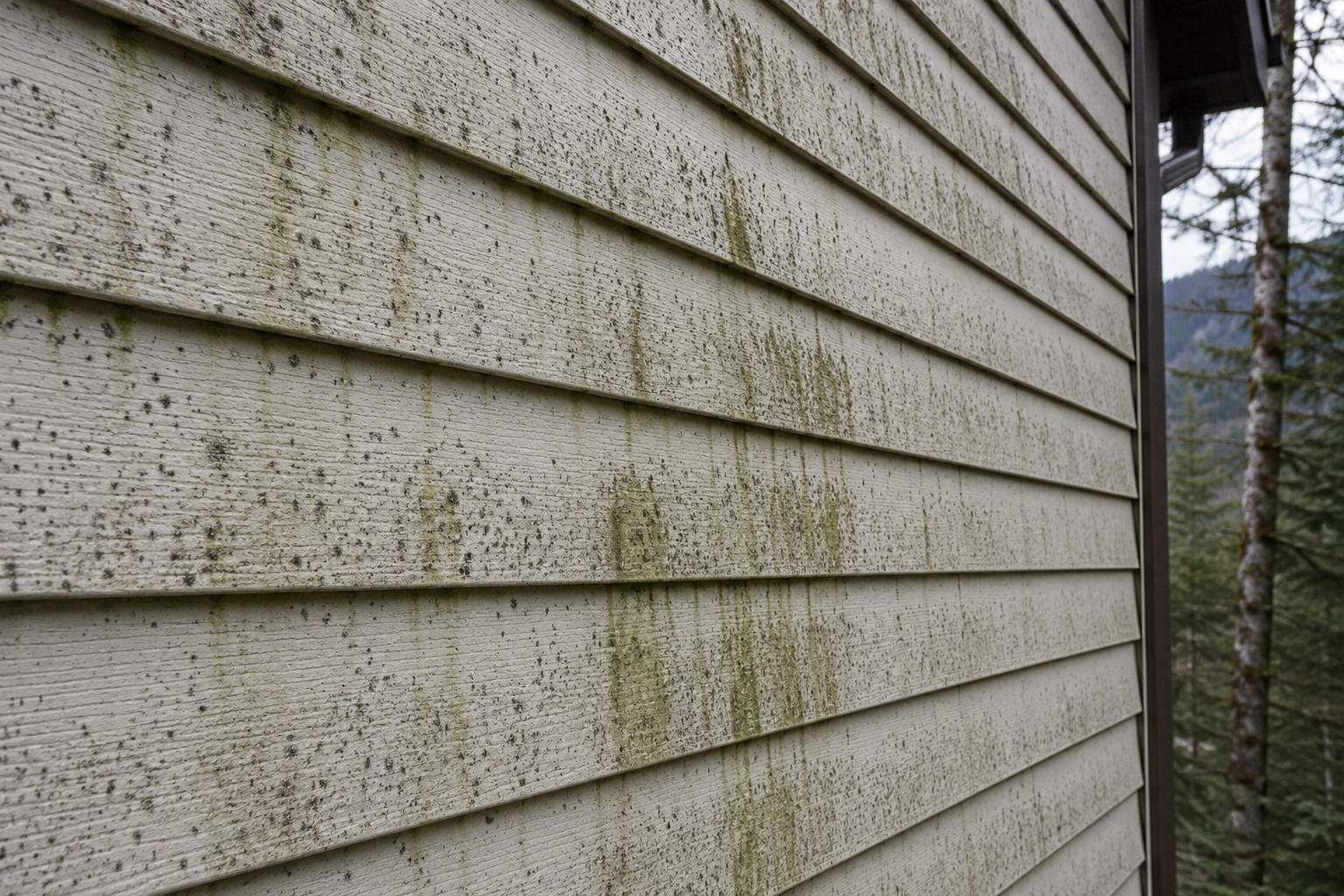
•Green or black streaking on siding — active algae or mildew growth, not just dirt.
•A chalky or dull cast to the paint — buildup diffusing the color.
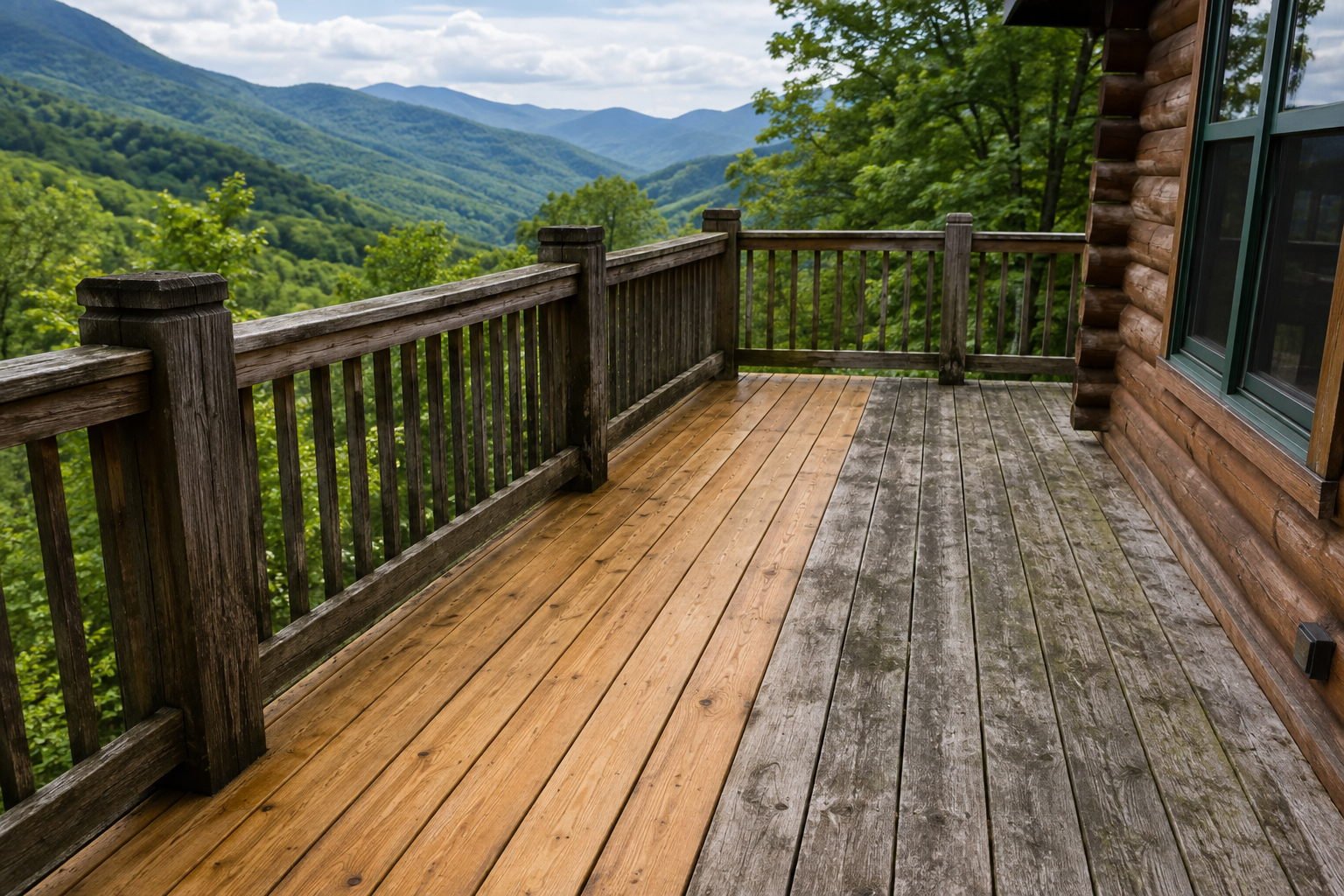
•Slippery walkways, steps, or deck boards — organic film, and a genuine safety issue.
•Visible pollen accumulation in corners and under eaves — common through Tennessee's long pollen season.
•Dark patches on the north-facing walls — shaded elevations grow first and worst.
Our exterior cleaning services cover house washing, pressure washing, and window cleaning together, which matters for sequencing — washing siding sends rinse and runoff straight down the glass, so windows should be cleaned after the house, not before.
Matching the Method to the Surface
Not Everything Should Be Pressure Washed
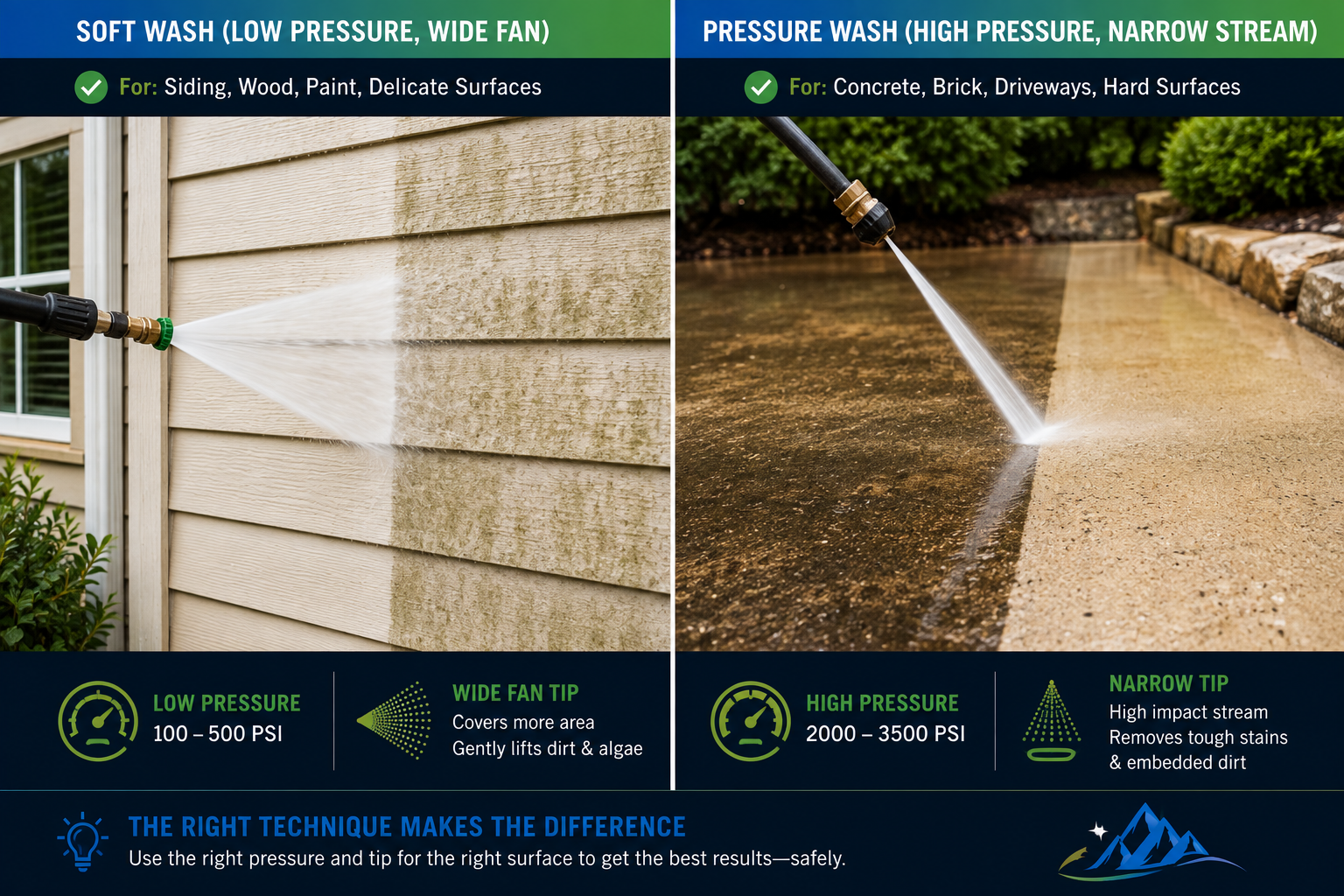
The phrase "pressure washing" covers two genuinely different techniques, and using the wrong one is how homes get damaged.
High pressure belongs on hard, durable surfaces — concrete driveways, sidewalks, masonry. Soft washing, which uses low pressure combined with cleaning solutions, is what belongs on siding, painted surfaces, wood, and roofs. Put high pressure on the wrong material and you get stripped paint, loosened siding panels that create gaps for moisture, damaged window and door seals, and splintered wood. Angi's guidance on the best time to pressure wash a house covers the same territory — the damage from too much pressure on soft surfaces undermines the very protection the wash was supposed to preserve.
This distinction matters more on cabins and older homes than on new construction, and it's worth asking any provider directly which method they'll use on which surface before work starts. A company that answers "pressure washing" for every surface on the property is telling you something.
Frequency Varies by Surface
A whole-home wash isn't one schedule, it's several running in parallel.
Siding generally wants a full wash once or twice a year depending on exposure, with shaded and tree-covered properties needing the higher end. Decks and patios should be cleaned at least annually — they take direct weather and organic buildup, and they're where slipperiness becomes a safety problem. Driveways and walkways do well on an annual schedule. Roofs are different: soft washing every two to three years helps hold back moss and algae and extends shingle life, and it should never be done with high pressure.
For rental properties around Pigeon Forge, the calculation shifts again. Listing photos are the entire first impression, and algae-streaked siding or a green-tinged deck reads instantly in a photo even when a guest can't name what's wrong. Washing ahead of peak booking season, rather than on a fixed calendar date, is the version of this that actually protects revenue.
There's a practical wrinkle for rentals too. A property with steady bookings has fewer open windows for exterior work, and the weather constraints don't bend to accommodate a full calendar — if the only free day in six weeks lands at 85 degrees in full sun, washing anyway produces a streaked result that looks worse in photos than what you started with. Owners who plan a season ahead get the good weather days. Owners who call when they notice a problem get whatever's left.
Deferred washing also compounds in a way that's easy to miss. Algae and mildew don't just sit on siding — they break down paint, wood, and sealants over time, which turns a maintenance line item into rot, warping, or early replacement. The wash isn't only about how the property photographs. It's what keeps the surfaces underneath from needing work that costs several times more.
Questions Worth Asking Before You Book
•Which surfaces get soft washing and which get high pressure? The answer should be specific, not blanket.
•Do you use cleaning solutions or water only? Water alone won't kill growth at the root.
•Are windows being cleaned, and in what order? House wash first, then glass.
•What's the plan if the weather turns? Reputable crews reschedule rather than wash in bad conditions.
•Are you insured? Especially relevant on multi-story and sloped-lot properties.
If you want a schedule built around your property rather than a generic calendar, you can request a quote or see what we cover in Pigeon Forge.
Frequently Asked Questions About Pressure Washing in Tennessee
What's the best month to pressure wash a house in Tennessee?
Spring is the strongest window, typically once temperatures reliably clear 40 degrees and before summer heat sets in — it clears winter mildew and early pollen in a single pass. Fall is the second-best option, removing a summer's accumulation before it sits through winter. If you only wash once a year in East Tennessee, make it spring.
How often should a house be pressure washed?
Once a year is the general baseline, but humid climates warrant every six to twelve months, and twice a year is often ideal across the Southeast. Properties under heavy tree cover, on shaded lots, or near heavy traffic and construction should plan for the higher frequency. Decks and driveways run on their own annual schedule, and roofs need soft washing every two to three years.
Will pressure washing damage my siding or paint?
It can, if the wrong method is used. High pressure on siding, painted surfaces, or wood can strip finish, loosen panels, damage seals, and splinter boards. Those surfaces should be soft washed — low pressure combined with cleaning solutions that kill organic growth rather than blasting it off. High pressure is appropriate for concrete and masonry, not for the side of your house.
The Bottom Line on Timing
Deciding when to pressure wash your house comes down to three things: the season, the temperature on the day, and how long it's been. Spring is the strongest window in Tennessee, an overcast day between 40 and 75 degrees produces a better result than a hot sunny one, and most homes here want washing once or twice a year rather than whenever things look bad enough to notice. By the time siding looks obviously dirty, growth has usually been established for months.
At Total Cabin and Home Maintenance, we've built the business around having the professional equipment most homeowners don't own and knowing which method belongs on which surface. Our crews work on homes, cabins, and rental properties throughout Pigeon Forge, Gatlinburg, Sevierville, and the wider Smoky Mountain region. Whether it's a single wash before guests arrive or a quarterly plan that handles the timing for you, both work — the plan is one option, not the price of entry.
If your siding hasn't been washed this year, take a look at our exterior cleaning services and let's find the right window for it.
Samson Ferrell | Total Cabin and Home Maintenance